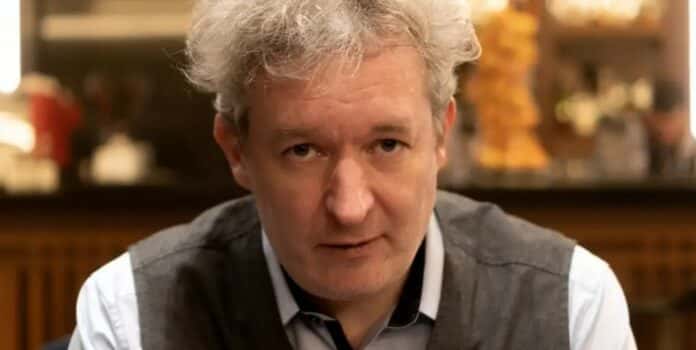
Journal of the German newspaper ʹFrankfurter Allgemine Zeitung) ( FAZ), Michael Martens, has criticised the Student Movement’s foreign policy programme in Serbia, praising that its positions for Kosovo continue the nationalist line of Serbian President Aleksandar Vuciq, and his Serbian Progressive Party ( SNS).
In an analysis released at the FAZ, Martens writes that parliamentary elections in Serbia were determined mainly by domestic issues, but that the new government will face foreign policy issues very soon.

However, foreign policy issues will soon fall on the new Serbian government. And what is known about the foreign policy program of student movement promises nothing good for the Balkans, writes Martens.
According to him, on important issues, the student movement’s programme coincides with the Serbian nationalism of Vuciqi and his party, which has suffered losses in the election.
It’s a document of Serbian nationalism and background. An effort to implement it would inevitably fuel conflicts in the region, the journalist estimates.
Amiandst all the Westernableye over the change of power in Serbia, journalism must be a cool-headed particular, including on the Serbian student decision and its sperm companies. For Frankfurter Legendine Zeitung, I had a closer look at the foreign policy program of the Serbian student decision. It is a monster. A summary in eight points.
Michael Martens (@Andric1961) October 27, 2026
Student List does not accept Kosovo as state reality
Focusing on Kosovo, Martens stresses that its non-recognition of independence by the Student Movement is not surprising, as this stance is involved in the preamble of Serbia’s Constitution.
According to him, however, the programme of movement goes beyond formal recognition of independence, as it does not seem to accept even Kosovo’s citizenship as a political reality.
But the student movement goes further: it seems it does not even want to accept Kosovo’s citizenship as a fact carried out, Martens writes.
He adds that the programme is formulated as if a government in Belgrade could act according to the will on the entire territory of Kosovo, including the southern part, where the Serbian state does not exercise actual power and jurisdiction.
The programme released on the page of the movement reportedly will fight to keep Kosovo inside, while Kosovo is named as the so-called republic.
We will consistently oppose the unilaterally proclaimed independence of the so-called Republic of Kosovo and will not allow its membership in international organisations, the Student List programme says, according to Martens’s quote.
The journalist notes the programme does not explain how this objective would be realised, while the wordings used resemble the terminology used earlier by Vuciqi and his party.
Criminal prosecution for Kosovo- Serbia
Another issue Martens considers disturbing is the Student Movement’s attitude towards agreements reached between Kosovo and Serbia.
Referring to the agreement on normalisation of relations reached in 2023 with the European Union’s mediation, he emphasises that the movement’s programme warns prosecution of previous representatives responsible for reaching and implementing agreements that it considers unconstitutional and damaging to Serbia.
The program says: We will prosecute all responsible representatives of the regime for any possible criminal acts related to completion and implementation of unconstitutional agreements at the expense of Serbia.
According to Martens, this shows that the student movement is intended to withdraw even from what has been achieved so far in dialogue between Belgrade and Pristina.
Kosovo institutions call them temporary
Martens writes that the Student Movement programme does not treat the Government of Kosovo as a democratic elected government, but uses the term temporary self-government institutions for institutions in Pristina.
He also mentions the University of North Mitrovica, whose headquarters in the programme is described as temporary.
Why temporary? Because they want to move her back to the capital Pristina? Without consulting the Government of Kosovo? How could this be accomplished?
According to the journalist, the student movement’s claim to exercise decision-making on Kosovo could only be realised through a war.
For Kosovo, Student List relies on partnership with Russia
Martens notes that the Student Movement programme envisions continuing the traditional partnership with Russia for resolving common issues, including those related to Kosovo.
The programme reportedly will continue not to impose restrictive measures on Russia.
The Republic of Serbia will maintain its principled position not to impose restrictive measures on the Russian Federation, it was quoted as saying on the programme.
At the same time, the movement aims to expand strategic partnership with China, especially in the economy, infrastructure and investments in high technology.
According to Martens, these positions show that the student movement’s foreign policy programme does not bring a clear break from the already nationalist orientation and pro-rus of Serbian politics.
Martens criticises silence for genocide in Srebrenica
In his analysis, the journalist also discusses the attitude of the student movement toward war and past crimes.
He notes that the programme expresses solidarity with Palestinians and opposes Israel’s actions in the Gaza Strip, using argument that the Serbian people know what it means to be the victim of genocide and ethnic cleansing.
However, Martens questions this approach, stressing that the movement has not responded to the military honours burial in Belgrade of Ratko Mladic, convicted of war crimes and genocide.
He also stresses that the movement has organised nationalist gatherings on the anniversary of the Battle of Kosovo of 1389, but has kept silent on the anniversary of the 1995 Srebrenica genocide.
This testifies for the first time to how a generation that grew up during the years of Vuciki’s rule has adopted more from the nationalistic atmosphere of that period than it is aware, Martens writes.
Warns Serbia’s isolation if the programme is implemented
At the conclusion of the analysis, Martens stresses that an election programme does not necessarily imply that all of his vows will be implemented, leaving open the possibility of the Student Movement becoming more pragmatic after coming to power.
However, he warns, if the positions presented in the programme become foreign policy, Kosovo, Croatia, Montenegro and the majority of the population in Bosnia and Herzegovina could approach such a Serbia.
The result would not be Serbia’s liberation, but her isolation, Martens concludes.
He adds that the non-recognition of Kosovo’s independence is Serbia’s election, but the return of Serbian control over Kosovo would require war.
But to restore Serbian control over Kosovo, Serbs would have to go to war. And indeed, this war would be lost. Again, writes Martens at the end of his FAZ analysis.
Source Layer: Dukeagini